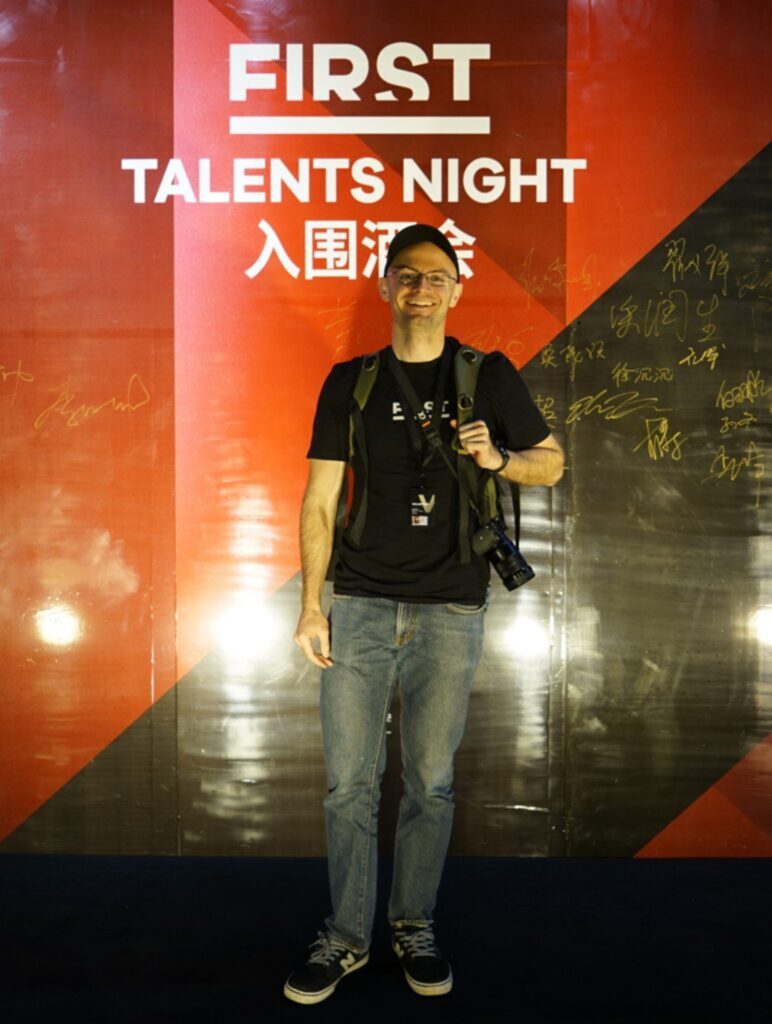
Hi there! I’m Brad Limov, a media scholar based in Austin, Texas. In a nutshell, my work examines the dynamic interactions between contemporary social movements, emerging technologies, and evolving communities of media practice. I have a particular interest in understanding when, where, and how media practices build power to actively challenge systemic conditions.
You can find my research on Google Scholar and Research Gate.
As a publicly engaged thinker, I often reflect on how my research can be useful to the communities that I study, teach, and participate in. The work I do is primarily ethnographic, grounded in gatherings and conversations where consensus that underpins media practice forms.
I received my PhD from the School of Journalism and Media at UT-Austin. My award-winning dissertation, Media Industry Events as Platforms for Social Justice: Moving from Inspiration to Impact in Creative Production, details how events catalyze change within industries more generally known for performative gestures. I have recently published my core argument in Communication, Culture & Critique, which draws on data from South by Southwest (SXSW) to describe how marginalized communities of practice leverage these events in spite of the prevalence of what I call conditional solidarity. Earlier work related to this dissertation project appeared in Critical Studies in Media Communication and NECSUS_European Journal of Media Studies. My next project shifts focus from offline events to the everyday platformized labor of media makers, investigating the Stop Killing Games movement to understand the dynamic between content creators and their audiences in contesting unpopular industry practices.
My second stream of research shifts focus from entertainment media industries to news industries, where I investigate the interactions between journalistic practices and social justice movements. This work, which benefited from research appointments and fellowships at UT-Austin’s Technology and Information Policy Institute, Solidarity Journalism Initiative, and Center for Media Engagement, addresses how activist organizing receives public attention through news media. This collaborative work is ongoing and has resulted in publications in Information, Communication & Society, Media and Communication, and Newspaper Research Journal. My next project in this research area looks at how the creator economy is supporting journalism outside of traditional economic models via monetization platforms such as Patreon.
I lived abroad for seven years prior to my arrival in Austin, first in China and then in Japan. During that time, I worked as an English language instructor and translator and received an MA in Cinema Studies from Nagoya University. My interest in cultures foreign to me and global media flows led to my first publication in the International Journal of Communication on US audiences for film and television produced abroad. While restrictions that came with the COVID-19 pandemic led to a focus on US-based case studies for my ethnographic work, I am returning my scholarly attention to transnational Chinese and Japanese media. My new project in this research area analyzes how social media representations of Chinese and Japanese societies complicate dominant media narratives of American exceptionalism, shaping understandings of social progress abroad and impacting domestic progressives agendas.